Skip navigation

Economists for Justice Reform


Economists for Justice Reform is a group of respected Australian economists who support the efforts of the Justice Reform Initiative to reduce Australia’s over-reliance on incarceration. They include:


  • Professor Nicholas Biddle

  • Professor Robert Breunig

  • Professor Bruce Chapman AO

  • Saul Eslake

  • Nicki Hutley

  • Dr Michael Keating AC FASSA FIPA

  • Professor John Piggott AO FASSA

  • Professor John Quiggin

  • Emeritas Professor Glenn Withers AO

  • Professor Justin Wolfers


Economists for Justice Reform has been established in recognition that prison is expensive and ineffective at building community safety. The total net operating and capital costs for Australian adult prisons is now $7.3 billion. When it comes to imprisoning children and young people, Australia now spends more than $1.1 billion a year.

Instead of reducing crime or promoting community safety, incarceration increases the likelihood of reoffending. For too long, politicised policy making has resulted in Government spending more and more on an expensive, harmful and ineffective imprisonment, instead of investing in what the evidence shows actually works to build safer communities.

Australians deserve a smarter approach and a better return on their tax dollars. Instead of spending $8.4 billion each year on prisons, we need to invest in evidence based alternatives including early prevention, early intervention and community-led solutions, including those led by First Nations groups.

Read the media release here.

Australia is spending $8.4 billion dollars on prison per year.


The Economists

Professor Nicholas Biddle

Professor Nicholas Biddle is Head of the School of Politics and International Relations. Prior to this, he was Deputy Director of the ANU Centre for Social Research and Methods, and head of the methods, survey, and evaluation programs in the centre. He has a...

Professor Nicholas Biddle

Professor Nicholas Biddle is Head of the School of Politics and International Relations. Prior to this, he was Deputy Director of the ANU Centre for Social Research and Methods, and head of the methods, survey, and evaluation programs in the centre.

He has a Bachelor of Economics (Hons.) from the University of Sydney and a Master of Education from Monash University. He also has a PhD in Public Policy from the ANU where he wrote his thesis on the benefits of and participation in education of Indigenous Australians.

He previously held a Senior Research Officer and Assistant Director position in the Methodology Division of the Australian Bureau of Statistics.

He is currently a Fellow of the Tax and Transfer Policy Institute.

Professor Biddle is a member of the Behavioural Economics Team for Australia (BETA) Academic Advisory Panel, (Prime Minister and Cabinet) and the Australian Statistics Advisory Council (Australian Bureau of Statistics).

Professor Robert Breunig

Professor Robert Breunig is the director of the Tax and Transfer Policy Institute at the Crawford School of Public Policy. From 2015 to 2016 he was the Director of the Crawford School of Public Policy. Professor Breunig is one of Australia’s leading Public Policy Economists....

Professor Robert Breunig

Professor Robert Breunig is the director of the Tax and Transfer Policy Institute at the Crawford School of Public Policy. From 2015 to 2016 he was the Director of the Crawford School of Public Policy.

Professor Breunig is one of Australia’s leading Public Policy Economists. He has published in over 90 international academic journals in economics and public policy. Professor Breunig has made significant policy impact through a number of his research projects including the relationship between child care and women’s labour supply and the effect of immigration to Australia on the labour market prospects of Australians.

Emeritus Professor Bruce Chapman AO

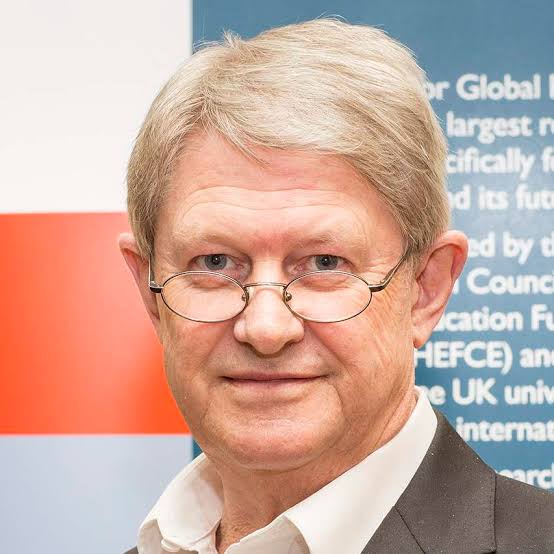
Bruce Chapman AO and is an Emeritus Professor of economics and has been employed at the Research School of Economics at the Australian National University since 1984 and has a PhD in economics from Yale University He is a labour market and education economist...

Emeritus Professor Bruce Chapman AO

Bruce Chapman AO and is an Emeritus Professor of economics and has been employed at the Research School of Economics at the Australian National University since 1984 and has a PhD in economics from Yale University He is a labour market and education economist with more than 300 papers published in these areas, as well as producing jointly several books, and about 100 media articles on economic policy. He has considerable experience in public policy, including: the motivation and design of the Higher Education Contribution Scheme (the first national income contingent student loan (ICL) scheme in 1989 (ICL)); helping initiate the Working Nation program in 1994; as a senior economic advisor to Prime Minister Paul Keating, 1994-96; as a higher education financing consultant to the governments of around 15 countries with respect to student loan reforms, based on the HECS system. He has published extensively on a range of issues, including higher education financing, long-term unemployment, marital separation, the economics of cricket, domestic violence, and government as risk manager. Over the last decade or so he has researched and written many papers related to the application of ICL beyond higher education, including for: drought relief; agricultural sustainable investments; for R&D investments; the financing of legal aid; and the collection of low-level criminal fines. He was the recipient of the Economics Society of Australia Distinguished Economist award in 2015, and the Order of Australia for contributions to economic policy in 2020.

Saul Eslake

Saul Eslake has over-forty years’ experience as a professional economist includes thirty years as chief economist at a number of financial institutions, including: National Mutual Ltd (at the time, Australia’s second-largest life insurance business); the Australia & New Zealand Banking Group (ANZ), one of...

Saul Eslake

Saul Eslake has over-forty years’ experience as a professional economist includes thirty years as chief economist at a number of financial institutions, including: National Mutual Ltd (at the time, Australia’s second-largest life insurance business); the Australia & New Zealand Banking Group (ANZ), one of Australia’s four large commercial banks; and Bank of America Merrill Lynch. He has also served on a variety of government advisory panels in Australia, covering statistics, foreign affairs and trade, tourism, housing and the arts. 

In 2015 Saul returned to the island state of Tasmania, where he grew up, and is now based there. Since then Saul has been running his own independent economics advisory and consultancy service, Corinna Economic Advisory from Hobart, Tasmania. Saul does keynote addresses at public and private conferences; participates in panel discussions; presents to boards, investment and asset allocation committees; undertakes customized analyses and reports for corporate, investor, not-for-profit and government clients; has given testimony to Parliamentary Committees; and appears frequently on radio and TV and in the print media in Australia and other countries.

Saul currently serves on the Advisory Panels for the Australian Parliamentary Budget Office, and is also on the Advisory Board of Jamieson Coote Bonds, a Melbourne-based specialist government bond fund manager.

Saul holds a first-class honours degree in Economics and an Honorary Doctor of Laws degree from the University of Tasmania. He also undertook the Senior Executive Program at Columbia University’s Graduate School of Business in New York, and the Australian Institute of Company Directors’ Company Directors course.

Nicki Hutley

Nicki Hutley is a highly respected economic practitioner. Over her career, she has worked in financial and investment markets and as a consultant on economic policy. She is particularly interested in the intersection of economy, society and environment. After many years in the corporate...

Nicki Hutley

Nicki Hutley is a highly respected economic practitioner. Over her career, she has worked in financial and investment markets and as a consultant on economic policy. She is particularly interested in the intersection of economy, society and environment.

After many years in the corporate world, including as a partner at Deloitte Access Economics, Nicki established her own economic consulting practice in 2021. Nicki is also Chief Economic Adviser to the Customer-Owned Banking Association, a Councillor on the Climate Council, and an Advisory Committee member for the Finance Women’s Index, which reports on women’s economic progress.. 

Nicki is a member of the Australian Business Economists’ executive committee and a past-president of the Economics Society of Australia (NSW branch). She is also a frequent commentator across the media.

Dr Michael Keating

In the 1970s Dr Michael Keating was Head of the Division at the OECD that coordinated the OECD economic forecasts and policy advice. Later he was responsible for assessing the medium-term economic prospects of OECD member countries and the demands on their governments. Subsequently,...

Dr Michael Keating

In the 1970s Dr Michael Keating was Head of the Division at the OECD that coordinated the OECD economic forecasts and policy advice. Later he was responsible for assessing the medium-term economic prospects of OECD member countries and the demands on their governments.

Subsequently, a few years after returning to Australia in 1979, Dr Keating was Head of three Commonwealth Government Departments:

  • The Department of Employment & Industrial Relations (early 1983 to 1986)
  • The Department of Finance (1986 to 1991)
  • The Department of Prime Minister & Cabinet (1991 to the end of 1996).

Particularly during his time at Finance and PM&C, Dr Keating was heavily involved in improving the performance of government programs by improving the available information and ensuring regular program evaluation. 

After nearly fourteen years as a Department Head, in 1997 Dr Keating decided to pursue a different career as a Fellow at the Australian National University and as an Associate Professor at Griffith University, before finally retiring in 2018. In addition, over those years, Dr Keating participated in numerous State and Federal Government Boards and enquiries.

Dr Keating’s interests as an economist have been in macroeconomic policy, with a focus on fiscal policy and labour markets. As an academic Dr Keating focussed heavily on the capacity of governments to govern, given the changing nature of our technologies and society. Finally, Dr Keating’s last book in 2018 is about the causes of rising inequality and the consequences of that increased inequality for our economy and society.

Throughout his career Dr Keating has also been especially involved in how best to help disadvantaged people and enhance their capabilities.

Professor John Piggott AO FASSA

John Piggott AO FASSA is Director of the UNSW Centre for Population Ageing Research (CEPAR) within the UNSW Business School, where he is Scientia Professor of Economics. A former Australian Professorial Fellow, he has published widely on issues in retirement and pension economics and...

Professor John Piggott AO FASSA

John Piggott AO FASSA is Director of the UNSW Centre for Population Ageing Research (CEPAR) within the UNSW Business School, where he is Scientia Professor of Economics. A former Australian Professorial Fellow, he has published widely on issues in retirement and pension economics and finance; and in public finance more generally; his research has appeared in the leading international economics and actuarial academic journals.

John worked with the Japanese government for nearly a decade from 1999 on pension and population ageing issues. From 2008-2010 he was Visiting Scholar at the Wharton School of Business, and in 2018, was awarded a Rockefeller Residency to undertake research into ageing and inequality in Asia.

In 2019, he was appointed co-chair of the Think20 (T20) Task Force on Aging Population during Japan’s G20 Presidency. He was a Commissioner on the US National Academy of Medicine’s International Commission on Creating a Global Roadmap for Healthy Longevity from 2019 to 2022. He jointly led the establishment of the International Pension Research Association (IPRA) which was launched at the OECD in Paris in 2019. At a national level, he was a member of both the Henry Tax Review (2008-9) and the Australian Ministerial Superannuation Advisory Committee for 5 years from 2007. He served on the Steering Committee of the annual Nikkei-Financial Times International Conference on Ageing and the Advisory Board of the Nikkei Asia Award from 2023-2024. John is a member of the Advisory Committees of the International Centre for Future Health Systems, the Global Policy Hub, and the Social Policy Research Centre, all based at UNSW Sydney.

At UNSW Sydney, John served three terms as Head of School of Economics, was Associate Dean Research for the Business Faculty for 7 years, and was Interim Dean of the Faculty for more than 12 months in the lead-up to its integration with AGSM. He was elected to the University Council in 2012, and re-elected in 2014 and 2016. In 2020, he was the recipient of the UNSW Business School Staff Excellence Global Impact Award. In 2024, John received the UNSW Business School Staff Excellence Lifetime Achievement Award for Impact.

Professor John Quiggin

John Quiggin is a Professor in Economics at The University of Queensland and is prominent both as a research economist and as a commentator on Australian economic policy. John completed his undergraduate studies at the Australian National University with a Bachelor of Arts in...

Professor John Quiggin

John Quiggin is a Professor in Economics at The University of Queensland and is prominent both as a research economist and as a commentator on Australian economic policy.

John completed his undergraduate studies at the Australian National University with a Bachelor of Arts in Mathematics in 1978 and a Bachelor of Economics in 1980. He then completed a Master of Economics through coursework and thesis at the Australian National University in 1984, and finished his Doctor of Philosophy in economics at the University of New England in 1988. 

He is a Fellow of the Econometric Society, the Academy of the Social Sciences in Australia and many other learned societies and institutions. He has produced over 1500 publications, including six books and over 250 journal articles, in fields including decision theory, environmental economics, production economics, and the theory of economic growth. He has also written on policy topics including climate change, micro-economic reform, privatisation, employment policy and the management of the Murray-Darling river system. One of his most recent books, Economics in Two Lessons: Why Markets Work so Well, and Why They Can Fail So Badly, was released in 2019 by Princeton University Press.

Emeritus Professor Glenn Withers AO

Glenn Withers is Emeritus Professor of Economics in the Crawford School of Public Policy, and was founding CEO of Universities Australia. Prior to that he was Professor of Public Policy at ANU and at the Australia and New Zealand School of Government. He is...

Emeritus Professor Glenn Withers AO

Glenn Withers is Emeritus Professor of Economics in the Crawford School of Public Policy, and was founding CEO of Universities Australia. Prior to that he was Professor of Public Policy at ANU and at the Australia and New Zealand School of Government. He is a Monash graduate and Harvard PhD, as a Menzies, Knox and Fulbright Scholar, and has held academic posts in Australia and overseas including at Harvard and Cambridge. He is a Fellow and Past President of the Academy of Social Sciences in Australia, and of the Australian Council of Learned Academies. 

He has produced a significant number of books, academic papers and government and consultancy reports. He has worked in and for government, including as chair of various Australian government bodies such as the National Population Council and the Economic Planning Advisory Commission, and he has chaired public inquiries regarding population issues, immigration, and infrastructure financing and was a member of a federal inquiry into child care and Co-Commissioner of the Productivity Commission's Stocktake of Micro-economic Reform. He was Strategic Adviser on Employment Programs for the Federal Cabinet. He was a Board member of CEDA and founding Chair of CEDA's Council on Economic Policy. He also was Global Board Chair for the Global Development Learning Network and continues as a GDLN Board Member.

He is Co-Founder and Director of the Social Cyber Institute, Director of Applied Economics P/L and Board Chair of Blended Learning International. He is also a Board member of Phenomics Australia. Professor Withers helped to establish the Productivity Commission, the Crawford School, ANZSOG and Universities Australia.  

He has been an adviser to government, private sector and community sector organisations in Australia and overseas, ranging from the Business Council of Australia to the OECD and UNDP. Professor Withers was made an Officer of the Order of Australia for services to applied economics, including for the design of the Australian immigration points system.

Professor Justin Wolfers

Justin Wolfers is a professor of public policy and economics at the University of Michigan and a visiting professor of economics at the University of Sydney. He is also a research associate with the National Bureau of Economic Research; a non-resident senior fellow with the Brookings...

Professor Justin Wolfers

Justin Wolfers is a professor of public policy and economics at the University of Michigan and a visiting professor of economics at the University of Sydney. He is also a research associate with the National Bureau of Economic Research; a non-resident senior fellow with the Brookings Institution, a non-resident senior fellow at the Peterson Institute for International Economics, a research fellow with the Institute for the Study of Labor (IZA) in Bonn; a research affiliate with the Centre for Economic Policy Research in London; an international research fellow with the Kiel Institute for the World Economy, and a fellow of the CESifo, in Munich. 

He was previously a visiting professor at Princeton, an associate professor at Wharton, an assistant professor at Stanford Graduate School of Business, and an economist with the Reserve Bank of Australia. He is also a past editor of the Brookings Papers on Economic Activity, and was a member of the Congressional Budget Office Panel of Economic Advisers. Dr. Wolfers earned his PhD in economics in 2001 from Harvard University, and was a Fulbright, Knox and Menzies Scholar. He earned his undergraduate degree in economics in his native Australia at the University of Sydney in 1994, winning the University Medal. 

Justin was named by the IMF as one of the "25 economists under 45 shaping the way we think about the global economy." His research focuses on labor economics, macroeconomics, political economy, law and economics, social policy and behavioural economics. Beyond research, he is a contributing columnist for the New York Times, appears frequently on TV, radio and in print. He is also a popular teacher, with many teaching awards to his name, and an author of a leading introductory economics textbook.

Share